One infantryman. Two percent of the map visible. No enemy in sight. Fourteen model decisions later, Red Alert’s own mission logic declared victory.
The player is Jev 1.13, a small structured decision model from TypeSafe. It does not write prose. It reads a block of state, answers typed questions with calibrated probabilities, and returns a choice. The game is the original Red Alert, and the mission is the first on the Soviet side: Lesson in Blood.
It starts with one infantryman
At frame zero Jev controls a single Soviet rifleman. It can see no enemies, and almost the entire map is still hidden. The harness offers ten legal choices. Jev chooses to move five cells east, with moving two cells west as the close alternative.
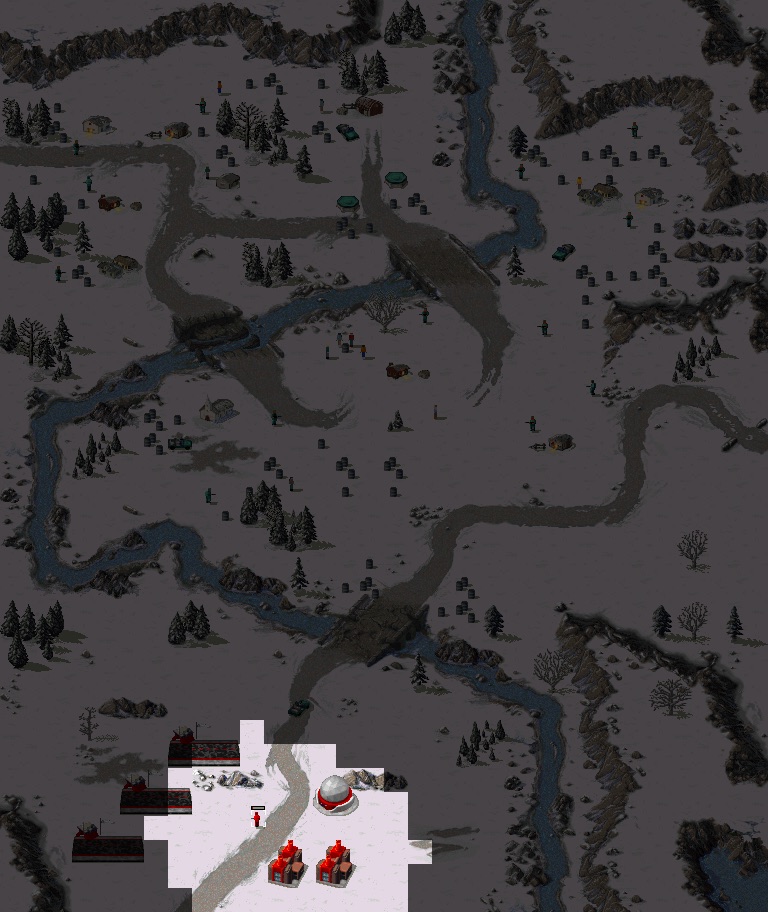
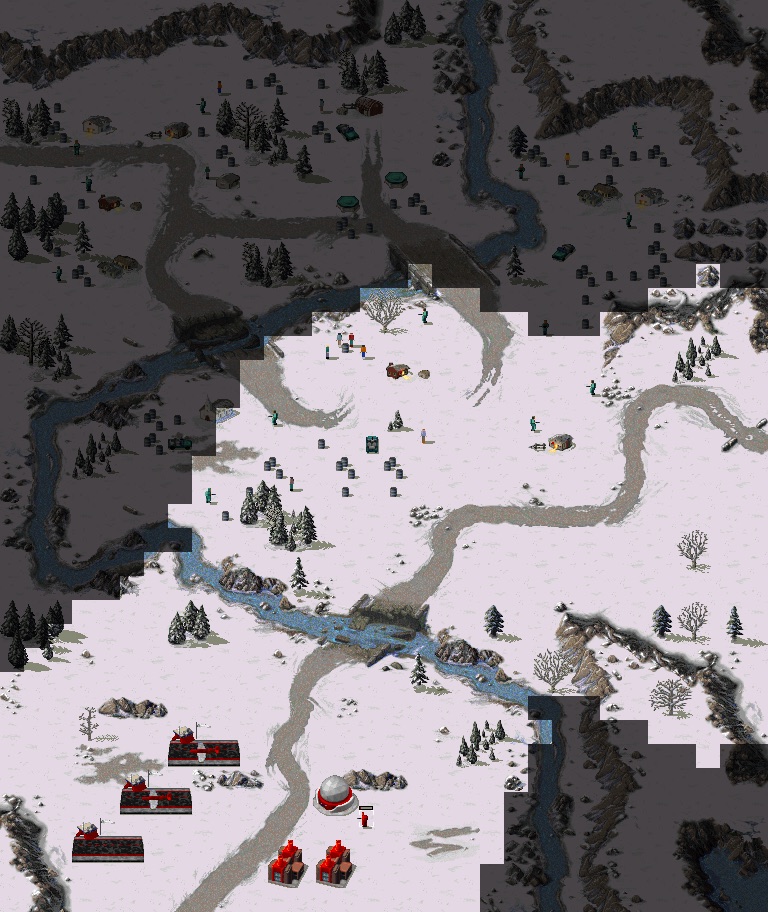
Five hundred frames later that choice has opened the map. Four hundred and ninety-four cells have been explored, the first French position is in view, and three Yak attack aircraft have arrived.
Jev is not given a walkthrough
Three layers do three different jobs, and keeping them apart is the whole design.
- Red Alert supplies the facts — visibility, health, ownership, ammunition, orders, map state, reinforcements and mission logic are all game data
- The harness makes them legible — it groups controllable units, lists the legal choices, and works out distance, exploration and recent activity in code
- Jev chooses — it picks which offered action each group should take, and the harness turns that choice back into ordinary game commands
Jev does not have to rediscover the mouse, and it is not told which option is correct.
It does not play beautifully
Units die. Groups disagree. Some decisions are close calls.
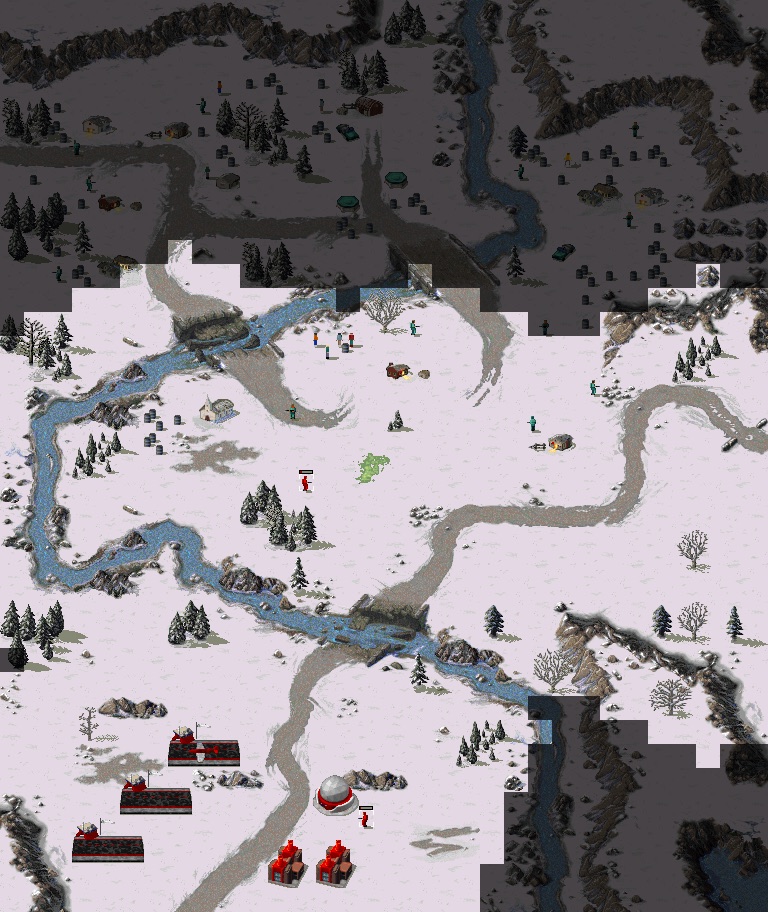
At frame 3,000 the Yaks choose a French building, while the surviving riflemen choose to move south towards the Yaks rather than attack an enemy nearby.
The first position falls
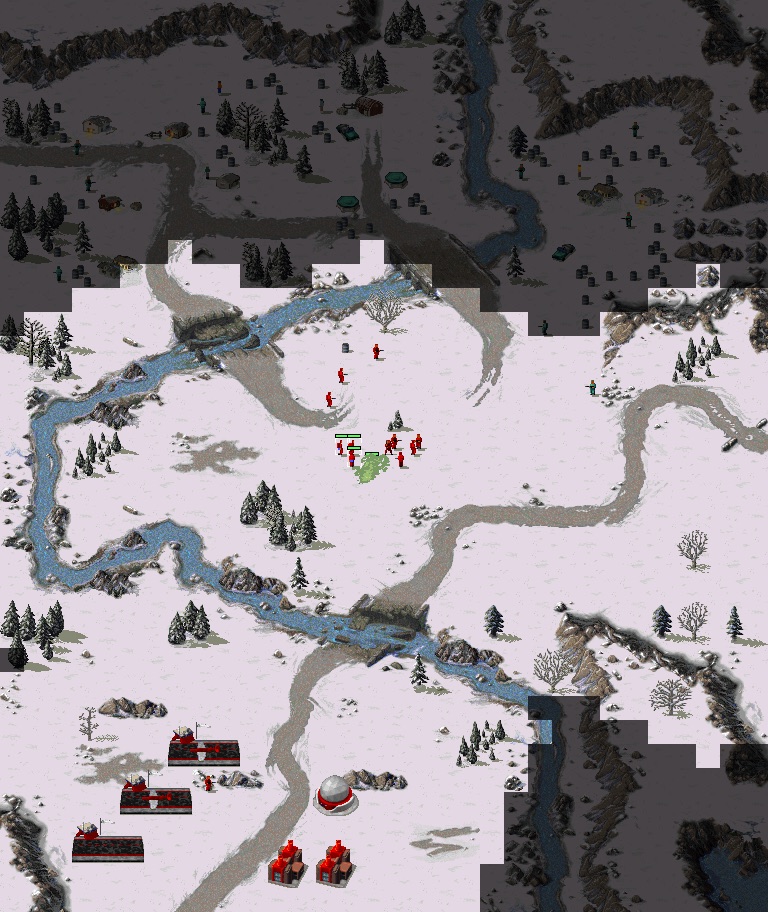
By frame 4,500 Jev has concentrated everything on a single French building: the Yaks, nine riflemen and four grenadiers. At frame 5,000 the building is gone from view and only one visible enemy remains. Every available group is sent after it.
More is hiding in the fog
Over the next five hundred frames another hundred and eighty-two cells come into view, and with them a fresh set of French units and buildings. Jev suddenly has large decisions to make again.
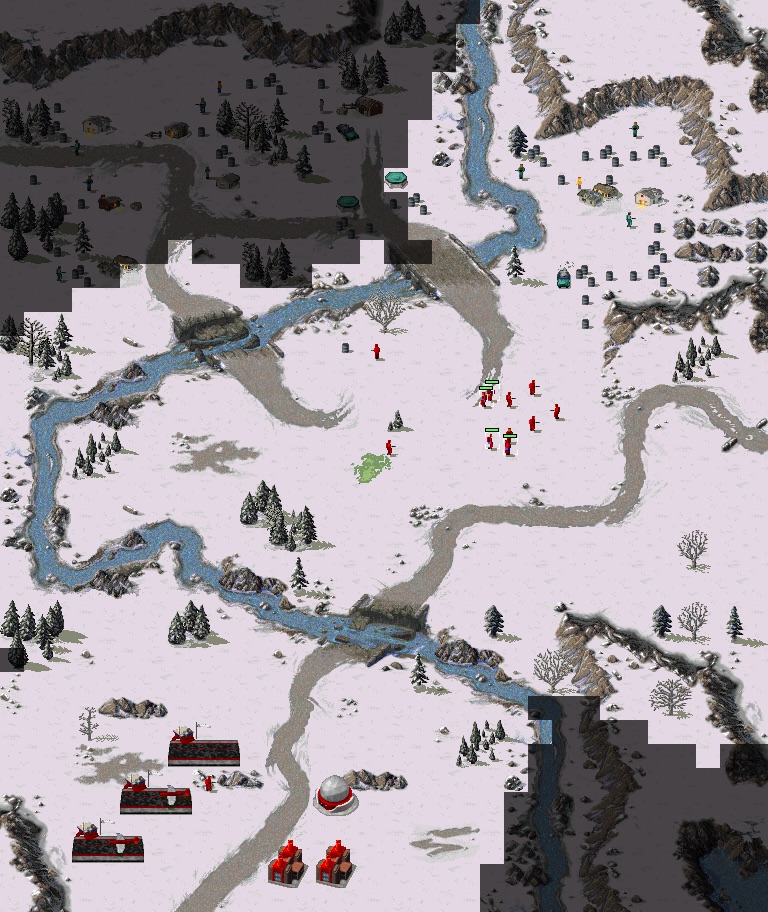
At frame 6,000 another reveal exposes two French pillboxes. The simulation keeps moving, and Jev keeps choosing from the legal actions in front of it rather than working through a list of targets.
Decision fourteen
At frame 6,500, with close to ninety percent of the map revealed, the Yaks choose a French Jeep from thirty-seven options. The grenadiers choose a French rifleman from another thirty-seven, with the Jeep as their close alternative.
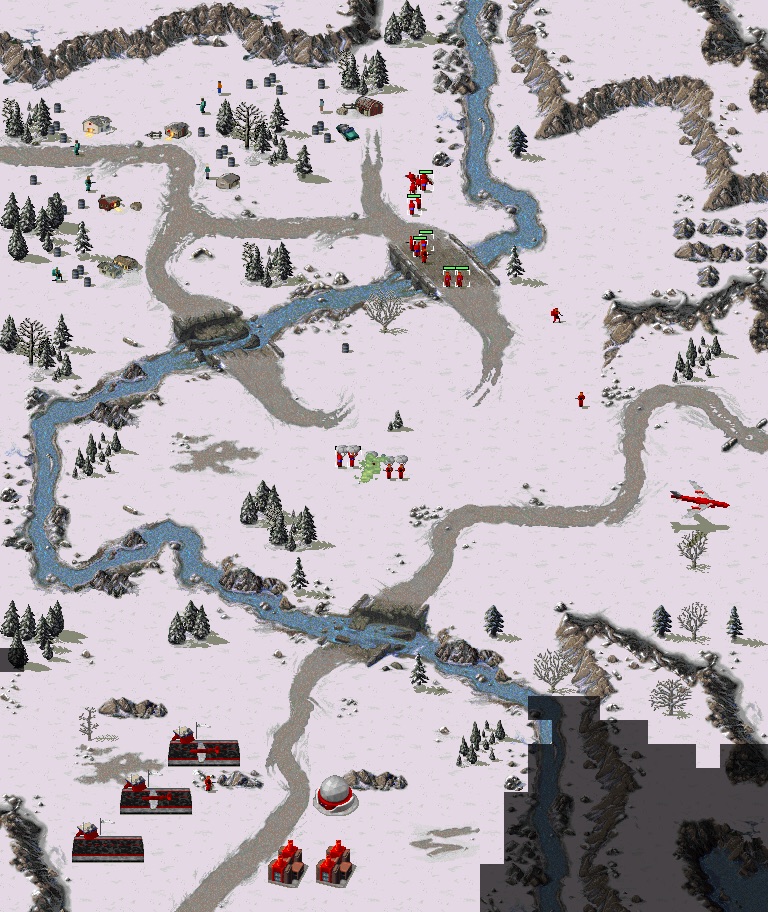
No fifteenth decision was needed. Red Alert kept running.
Two hundred and sixty frames later
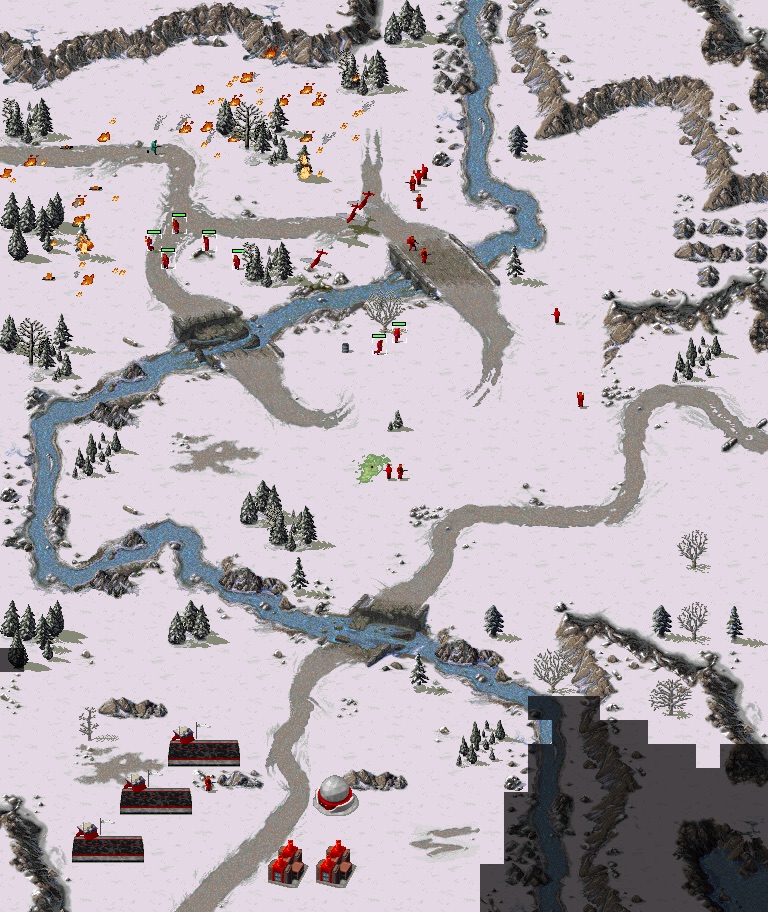
Orders resolve, units move, the fighting continues. Then the game’s own mission logic fires, and the mission is won at frame 6,760.
The whole run
Every decision, straight from the run’s record: what each group chose, and how many options it was choosing between.
- 0A lone rifleman moves five cells east — a close call against two cells west, from 10 options
- 500First contact. The Yaks attack a French infantryman; the rifleman goes for a Jeep. 29 and 32 options
- 1,000Every group onto the Jeep. Clear choices, from 30 and 33 options
- 1,500The Yaks take a second Jeep; the infantry turn on a soldier two cells away. 27 and 28 options
- 2,000All three groups onto the same Jeep. Clear choices
- 2,500Still the Jeep. Clear choices, from 25 options
- 3,000The groups diverge: Yaks hit a building while the riflemen move south to join them. Close calls, from 24 options
- 3,500Three groups, three targets. Close calls, from 20 and 21 options
- 4,000The Yaks commit to the building that anchors the first position. 17 options
- 4,500Everything onto that building — Yaks, nine riflemen, four grenadiers. 12 to 15 options
- 5,000The building is gone from view. Every group chases the last visible enemy. 12 and 13 options
- 5,500A new area opens and all three groups choose barrels. Close calls, from 32 and 33 options
- 6,000Barrels again, in a larger field. 15 and 16 options
- 6,500The last decision. Yaks take a Jeep; grenadiers take a rifleman, with the Jeep a close second. 37 options each
Did Jev really beat Red Alert?
Yes, with an important qualification. This is not Jev learning a strategy game from raw pixels. The harness gives it structured, player-visible state and generic scaffolding for making a decision.
- Game state — real, player-visible Red Alert facts
- Harness — groups units, lists the legal actions, derives generic decision metadata
- Jev — selects the actions
- Native simulation — carries out the orders and decides what happens
- Mission logic — decides whether it was a victory
The line that matters is that the harness makes each decision legible without knowing which option is strategically right. The run’s messier choices, and especially the fondness for barrels, are what exercising a real choice looks like.
The number that matters is fourteen
Between those fourteen calls the game does what games already do well: movement, combat, visibility, reinforcements, orders that go stale, scripted events. Asking a model to reproduce any of that would waste inference on problems the game has already solved.